Rufen Sie uns an
:
+8618925446207
Schicken Sie uns eine E-Mail
:
marketing@databeyond.com
 English
 Français
 Deutsch
 Español
 日本語
日本語 中文
中文




From Waste Bottle to New Bottle: DATABEYOND Enables the PET “Bottle‑to‑Bottle” High‑Value Loop
As global demand for recycled materials continues to rise, PET bottle recycling is shifting from downcycling to closed‑loop recycling. The EU has mandated that PET beverage bottles contain at least 25% recycled plastic by 2025, 30% by 2030, and 65% by 2040. Meanwhile, the global rPET market grew 24% year‑on‑year, with China contributing 35% of that incremental growth, largely driven by the rapid deployment of beverage‑bottle‑to‑bottle closed‑loop projects.
“Bottle‑to‑bottle” is becoming the industry consensus. But making it work is far more complex than it seems.
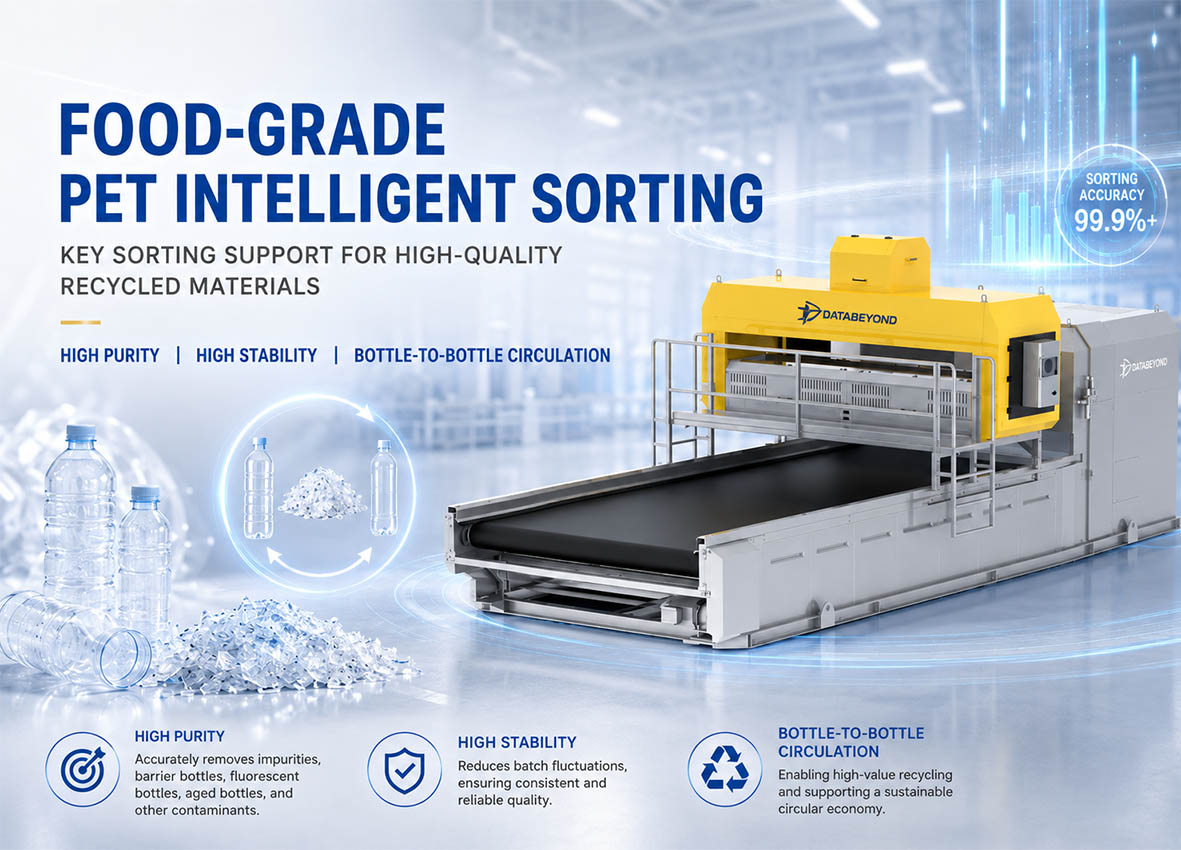
1. Complex Feedstock: Where Does the Real Difficulty Lie?
The prerequisite for a “bottle‑to‑bottle” loop is that the feedstock must come from original food‑grade PET bottles – beverage bottles, water bottles, etc. Oil containers, pesticide bottles, medical waste, industrial PET, and other non‑food packaging must be strictly excluded.
In practice, food‑grade PET bottles come from scattered sources and vary in colour, label type, and physical condition. They are often mixed with non‑food bottles, off‑spec bottles, heavily soiled bottles, as well as barrier bottles, fluorescent bottles, and aged bottles. Some barrier bottles are almost indistinguishable from ordinary food‑grade PET bottles by appearance alone. Once these contaminants enter the stream, they affect the purity, colour, and batch‑to‑batch consistency of the recyclate, and pose risks for subsequent food‑contact applications.
Therefore, the real challenge for high‑quality “bottle‑to‑bottle” recycling is not simply “sorting out PET”, but ensuring that all recovered material comes from genuine food‑grade PET bottles, while thoroughly removing non‑food bottles, off‑spec bottles, soiled bottles, and all other quality‑compromising items.
2. DATABEYOND’s Approach: From “Sorting by Material” to “Sorting by Quality”
To meet the demanding requirements of high‑quality PET recycling, DATABEYOND integrates AI, hyperspectral imaging, and multi‑sensor technologies into a smart sorting system that covers both whole bottles and flakes.
Whole‑bottle sorting – the first critical gate
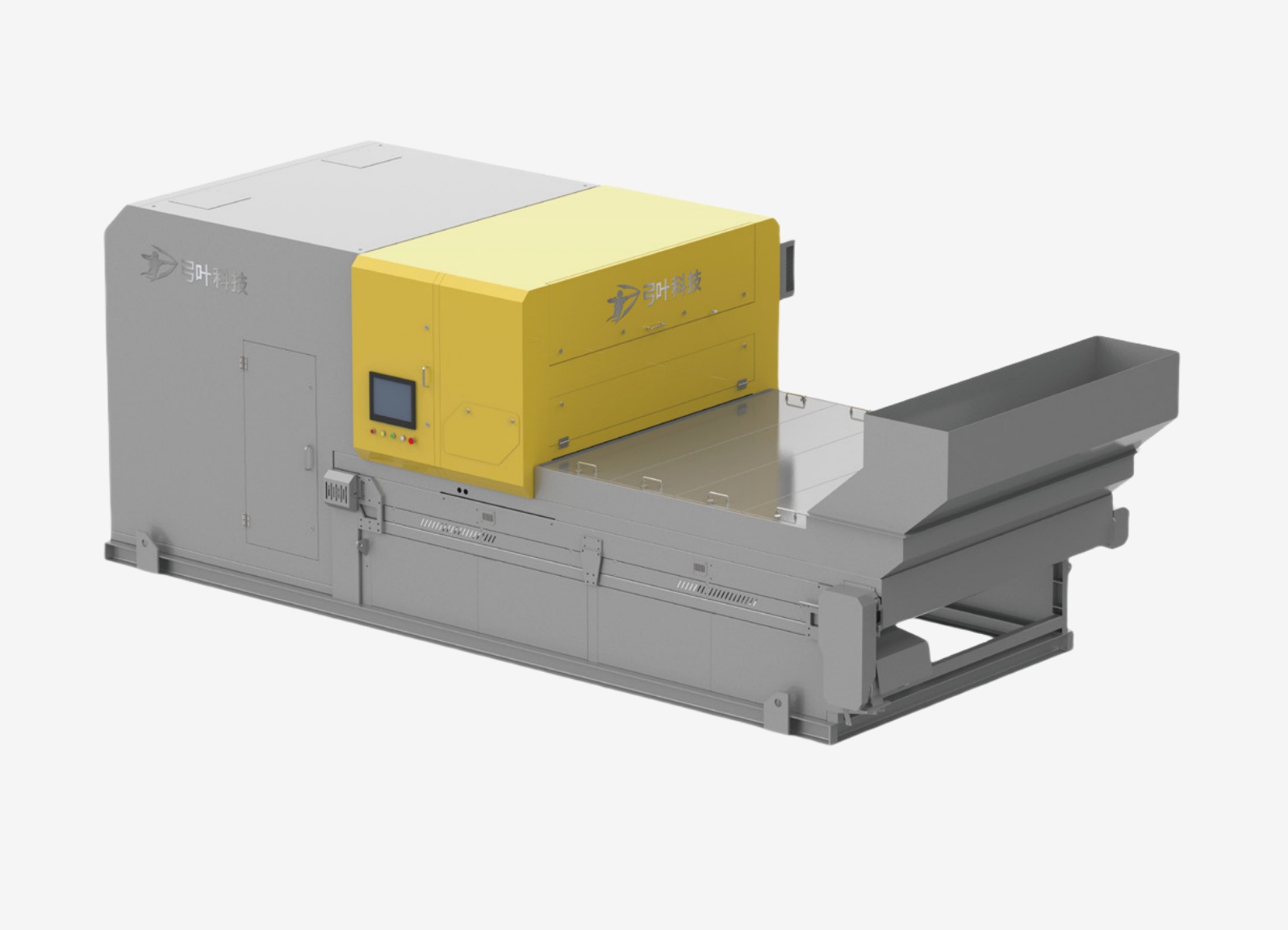
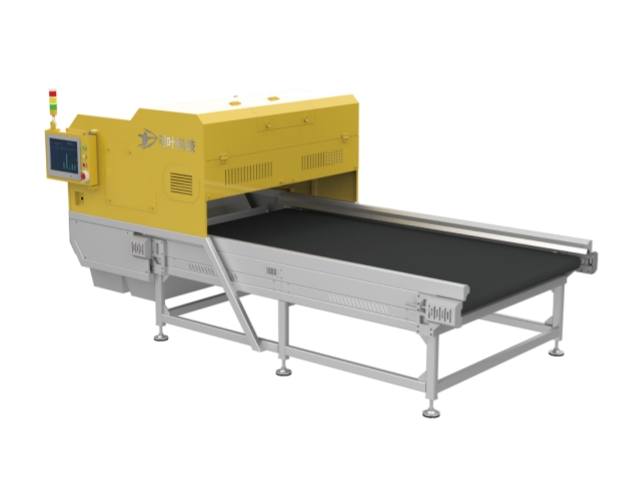
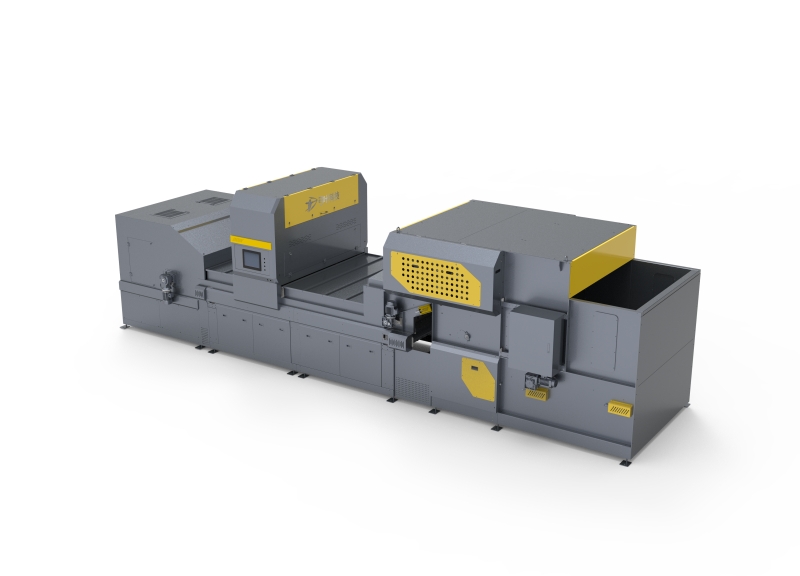
At the front end, incoming PET bottles are rigorously sorted to identify and remove oil containers, pesticide bottles, medical waste, industrial PET, and other non‑food packaging, while also separating off‑spec bottles, heavily soiled bottles, and non‑conforming containers. On top of this, the AI‑powered hyperspectral optical sorter further performs colour, material, and quality classification. The barrier‑fluorescence‑ageing 3D optical sorter detects and removes barrier bottles, fluorescent bottles, and aged bottles – with an accuracy exceeding 98% for delabelled barrier bottles, securing the first gate of the bottle‑to‑bottle process.
Flake purification – the final safeguard
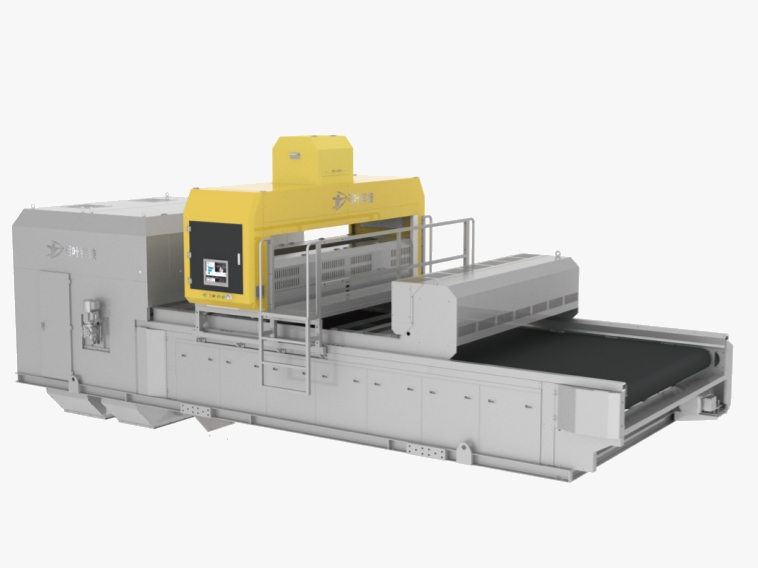
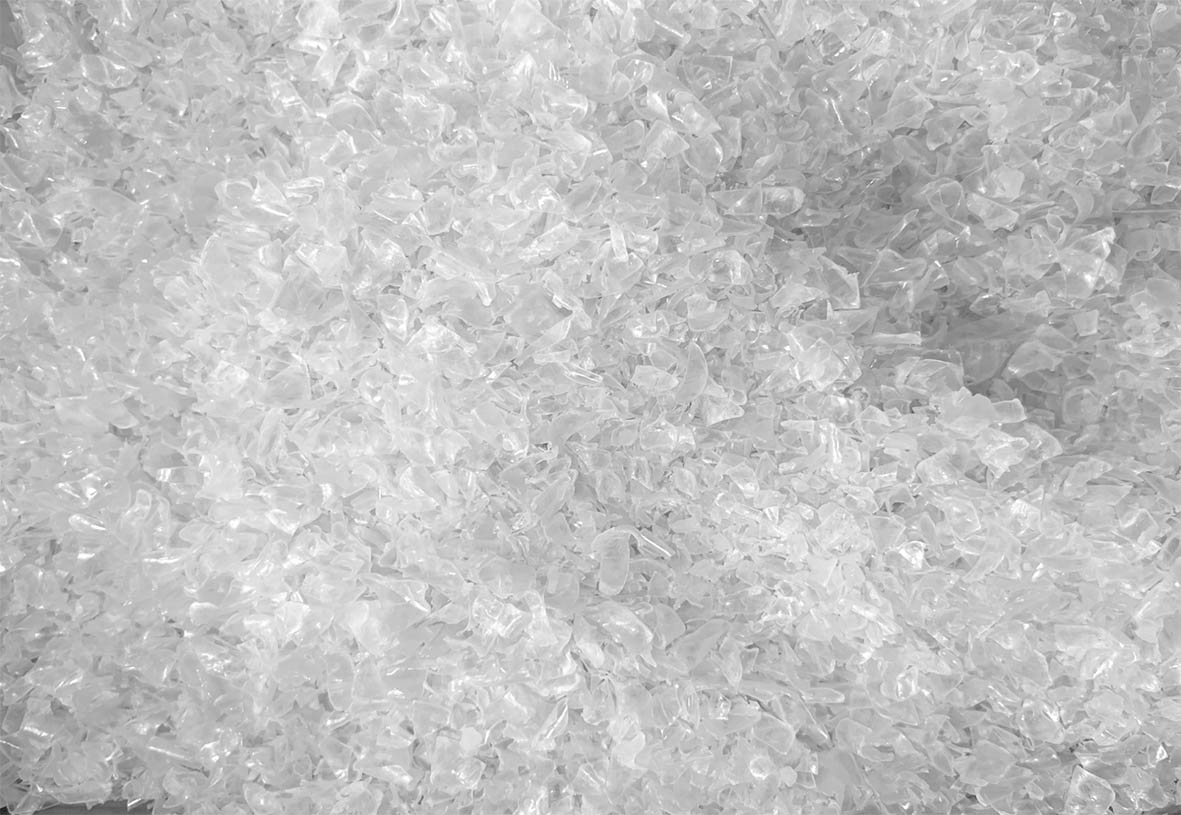
After whole‑bottle sorting, the material goes through washing and shredding. The shredded flakes are then subjected to fine purification using DATABEYOND’s AI‑hyperspectral flake sorters, removing residual foreign materials and off‑spec flakes.
Whole‑bottle sorting plus flake purification – both gates are indispensable.
3. From Waste Bottle to New Bottle: How Does the Bottle‑to‑Bottle Loop Work?
After rigorous sorting, washing, and reprocessing, the original food‑grade PET waste bottles are transformed into high‑quality recycled raw material, which is then used to produce new PET packaging products – completing the high‑value loop from “original food‑grade waste bottles → recyclate → new bottles”.
It must be emphasised that the final quality of food‑contact grade rPET depends on the entire chain: feedstock origin, front‑end sorting, cleaning and decontamination, regeneration technology, quality control, and regulatory compliance certification. Smart sorting is an indispensable link – it guarantees from the very beginning that the feedstock comes from genuine food‑grade PET bottles and that all non‑food, off‑spec, and contaminated bottles are thoroughly excluded.
International regulatory bodies such as the EU and the FDA have established strict certification frameworks for food‑grade rPET. Only through end‑to‑end control can recycled PET meet food‑contact standards and truly realise the bottle‑to‑bottle cycle.
4. DATABEYOND: Making Every Piece of rPET Worthy of Food‑Grade Standards
Going forward, DATABEYOND will continue to advance AI and multi‑sensor fusion technologies, driving PET sorting to evolve from “sorting by colour and material” to “sorting by quality and origin” – delivering more precise and stable smart sorting equipment for high‑quality recycled PET and food‑grade bottle‑to‑bottle loops.
We ensure that original food‑grade PET waste bottles are not just recycled, but return to high‑value circulation.
 IPv6 NETZWERK UNTERSTÜTZT
Eine Nachricht hinterlassen
Scannen zu Wechat :
Scannen zu WhatsApp :